Sole trader or company: how to choose a business structure
Liability, tax, paperwork and how you raise money all follow from the structure you pick. Here is how sole traders, companies and partners compare.
Choosing a business structure shapes what you pay in tax, what you stand to lose if things go wrong, how much paperwork you file, and how easily you can bring in investors or partners. The choice is rarely permanent, and most owners pick between trading as an individual and forming a company.
What the structure decides
Four things follow from the form you pick. Liability sets out whose assets stand behind the business if it cannot pay. Tax decides who is taxed, and on what. Administration decides how much you file, and with whom. Funding decides whether you can sell shares or have to borrow personally. Compare the options on those four points and the choice usually becomes obvious.
Trading as an individual
A sole trader, or in the United States a sole proprietorship, is the simplest version. You own everything, decide everything, and keep the profit after tax. It is also the least protected: a sole trader is personally responsible for all of the debts of the business, which is what unlimited liability means. In the UK you can start trading before you register, but once you earn more than 1,000 pounds in a tax year you must register for Self Assessment, as set out on gov.uk. In the US you are a sole proprietorship by default unless you register as something else.
Forming a company
A limited company is legally separate from the people who own it, so owners are responsible for business debts only up to the value of their investment. The trade-off is administration. A UK company must be registered before it trades, and its directors must keep records, file accounts and confirm the details Companies House holds. The company pays Corporation Tax on profits, and directors follow rules on how they take money out, such as salary or dividends. In the US, an LLC protects personal assets in most cases and passes profit through to the owner's tax return, while a corporation pays income tax itself, sometimes twice on dividends.
The options in between
Partnerships suit two or more owners and range from unlimited liability for a general partner to limited liability for every partner in an LLP. Labels such as S corp are tax elections rather than structures. Moving from sole trader to company is easier than moving back.
How to make the call
Ask what your worst realistic loss looks like, whether customers or lenders expect a company, and how much filing you will honestly keep up with. The US Small Business Administration lists the full range of structures and each one's ownership, liability and tax traits on sba.gov. Rules differ by country and state; this is general information, not legal or tax advice, so check your own position with an accountant before you register.
Bottom line. Pick the simplest structure that covers the risk you are taking, register it properly, and treat the move to a company as a step you take when customers, lenders or liabilities ask for it.
More in Business
 Photo: Wikimedia Commons (CC BY 2.0)
How to set payment terms that get you paid on time
Set your own payment terms, print an exact due date, and follow up on a fixed rhythm. Here is what the law allows when a business pays late.
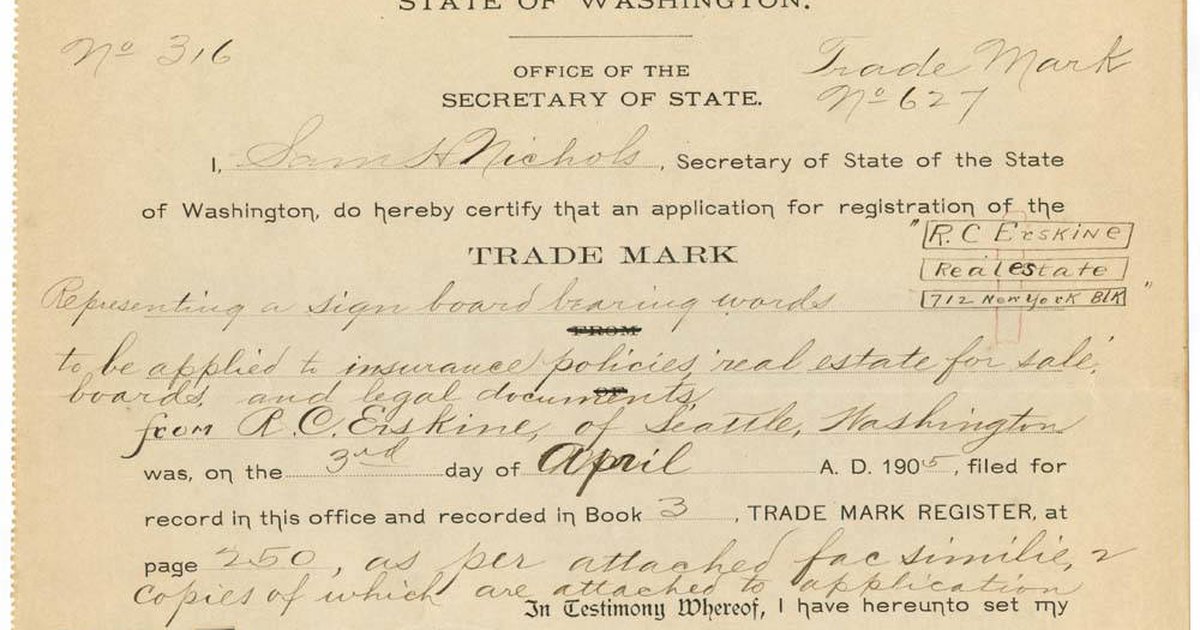 Photo: Wikimedia Commons (Public domain)
How to check a brand name before you commit to it
Search company registers and trademark databases in the right order, and know what a clean search can and cannot promise before you spend on branding.
How to build a cash flow forecast that holds up
A cash flow forecast tracks when money arrives and leaves, so a short month shows up early, while there is still time to do something about it.